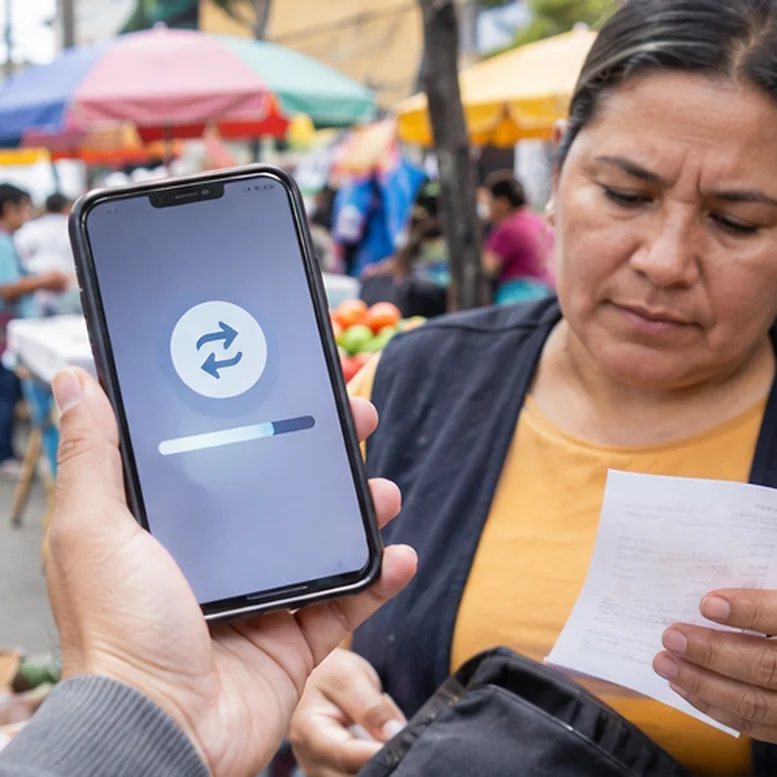
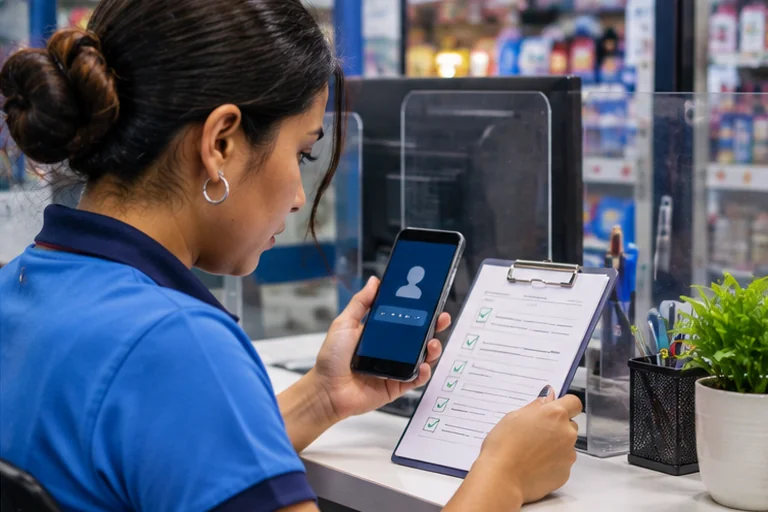
A person assisting with money transactions may learn a customer’s account identifier and other limited details. That access should not become an excuse to collect as much information as possible. The most professional workflow uses only data necessary for the approved transaction.
Customer assistance does not justify collecting everything
Helping a customer verify a transaction rarely requires copying an entire account screen or storing an identification document in a chat. The narrower the problem, the more carefully the agent can limit what personal information is handled.
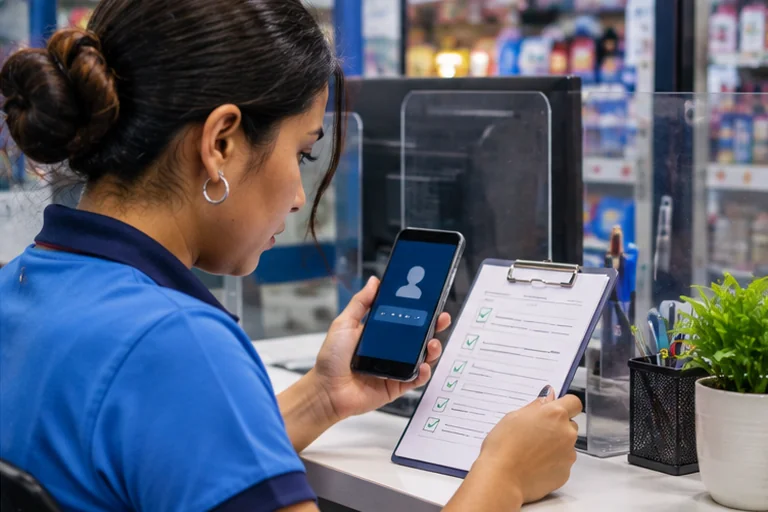
Agent reviewing verification papers and a phone at a desk.
A payment query with sensitive account details
Imagine a customer who offers to send a screenshot showing the entire account page, including messages and contact details, when only a player ID is needed. Accepting and storing the whole screenshot creates an unnecessary collection of information. The agent can instead ask for the specific field required by the current step.
Prevent bystanders from seeing unrelated account records. Why is a transaction reference better than a full screenshot? Collect only fields the authorized workflow needs. A separate control follows: Delete redundant sensitive notes when they are no longer required.
Keeping only the necessary service record
Limit notes to the transaction reference, relevant amount, status and approved identifier. Keep working devices locked, avoid displaying other customers’ histories in public and delete redundant screenshots according to the operating process. Explain why each requested detail is needed, rather than requesting a passport or password by habit.
Why is a transaction reference better than a full screenshot?
- Collect only fields the authorized workflow needs.
- Prevent bystanders from seeing unrelated account records.
- Delete redundant sensitive notes when they are no longer required.
Information that should not reach a group chat
A request for a password, recovery code or unrelated document should be treated as a warning unless a verified process specifically justifies it. Payment support and account ownership are different roles. A well-meaning cashier can create a problem without any malicious intent by keeping too much data.
Minimize personal data collected during mobile-payment assistance while preserving useful transaction records. The related DGM News reference on customer assistance does not justify collecting everything is protecting data in MobCash operations.
Helping a customer without exposing identity
Data minimization makes customer service simpler: fewer fields to collect, fewer sensitive records to guard and fewer opportunities for confusion.
Data minimization matters most when a suspicious contact requests details without clear authority. Further context appears in Device Readiness Is More Than Meeting a Minimum Android Version.
#CustomerData #TransactionPrivacy #MinimalRecords